


Historic Walking Tour
Stay Somewhere with a Story
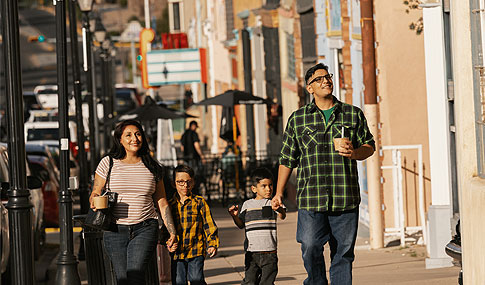
Explore the history of Las Vegas, New Mexico, one block at a time on the self-guided Historic Home Trail. This historic walking tour leads through one of the Southwest's most distinctive architectural destinations, where adobe traditions, Victorian ambition, railroad-era prosperity and modern design share the same streets.
Along the route, you'll discover the Las Vegas Plaza, Bridge Street, historic neighborhoods, architectural landmarks, film locations, colorful characters and a few legendary ghost stories. The featured sites represent only part of the city's extraordinary collection of more than 900 historic structures.
Slow down and look beyond the map. Step into local shops and restaurants, savor Northern New Mexico's red and green chile, listen for live music and talk with the people who keep these neighborhoods vibrant. In Las Vegas, history is not simply preserved. It is still being lived.

How the Historic Home Trail Works
The Historic Home Trail is organized around the periods in which different parts of Las Vegas developed. Following the tour through time makes it easier to see how trade, transportation, migration and changing architectural tastes shaped the city.
Explore historic districts on both sides of the Gallinas River.
Identify architectural styles ranging from traditional adobe to Victorian, Mission Revival and International Style.
Find locations connected to Santa Fe Trail history, railroad expansion and notable local figures.
Look for symbols marking film locations and places associated with local legends or reported apparitions.
Choose a short section or combine several districts for a longer self-guided walking tour.
Comfortable walking shoes, water and sun protection are recommended. Please respect private property and view residences from public sidewalks unless a location is clearly open to visitors.

Why Las Vegas Is a Remarkable Historic Destination
Las Vegas, New Mexico, offers an unusually complete view of Southwestern and American architectural history. More than 900 historic structures remain across the community, including homes, commercial buildings, schools, churches, hotels and civic landmarks.
Unlike a museum district separated from everyday life, the city's historic neighborhoods remain active places where people live, work, study, shop and gather. That authenticity makes the Historic Home Trail more than a collection of old buildings: it is a walk through the continuing story of northern New Mexico.


Where the West Began
Las Vegas, New Mexico, was once the largest city on the Santa Fe Trail and an important gateway to the American West. Here, where the Sangre de Cristo Mountains meet the plains, Indigenous, Hispanic, European and American histories converged to create a community rich in tradition, architecture, commerce and legend.
The city and its surrounding landscape retain a powerful sense of place. Visitors can still follow routes traveled by Native peoples, settlers, merchants, soldiers, railroad passengers and families seeking opportunity. Their stories remain visible in the Plaza, street patterns, buildings and neighborhoods encountered along the walking tour.
Thousands of Years of History
People have lived in and traveled through the fertile Las Vegas Valley for thousands of years. Archaeological evidence points to human activity in the region as early as 8,000 B.C. Pueblo communities occupied the area during the 1100s and 1200s, and nomadic Native peoples, including the Comanche, later moved through and used the surrounding grasslands. Spanish expeditions entered the broader region in the sixteenth century, followed by expanding settlements along the eastern slopes of the Sangre de Cristo Mountains in the late 1700s.
In 1835, the Mexican government awarded the Las Vegas Land Grant to 29 individuals. Following established Hispanic town-planning traditions, settlers built their community around a central plaza. The name Las Vegas means 'the meadows,' referring to the fertile grasslands that made the valley valuable for farming, grazing and trade.
Two Towns, One Community
Old Town Las Vegas developed around the Plaza on high ground above the Gallinas River. Its narrow streets radiate outward and respond to the natural landscape, including hills, arroyos and early trails. With much of its traditional form intact, the Las Vegas Plaza remains one of New Mexico's best-preserved historic plazas.
The arrival of the Atchison, Topeka and Santa Fe Railway in July 1879 transformed the east side of the river. A separate New Town grew near the depot, with a street grid influenced by Eastern urban planning. The railroad brought merchants, immigrants, travelers, investment and new architectural styles to Las Vegas.
For decades, Old Town and New Town operated as separate municipalities: the Town of West Las Vegas and the City of Las Vegas. The two formally consolidated in 1970, but their distinctive street patterns and architectural identities remain easy to see today.
A Living Architectural Legacy
By the turn of the twentieth century, Las Vegas had become one of New Mexico's leading commercial and cultural centers. Later changes in rail traffic, agriculture and the national economy slowed development. That quieter period also helped preserve an exceptional concentration of historic buildings and neighborhoods.
Today, the city presents more than a century of architectural history, from traditional New Mexican adobe and Territorial forms to Italianate, Queen Anne, Romanesque, Mission Revival and International Style buildings. Together, they tell stories of trade, transportation, education, migration, cultural exchange and the people who shaped the Southwest.
Walk the Historic Home Trail to experience the original Las Vegas: a welcoming northern New Mexico community where remarkable architecture, Western history, film locations, local legends and everyday life meet on the same streets.
